How To Clean A Dog’s Clothes, Sweaters, Bedding & Collars

Many dog owners quickly think of food, playtime, and veterinary care when they think about everything their pet needs to thrive. In addition to bedding, sweaters, and collars, dog essentials are crucial in maintaining your dog’s health and happiness.

According to the American Pet Products Association, in 2018, Americans spent over $72 billion on pets. Many of those funds go towards veterinary care, feeding, and grooming. In humans, dogs can carry germs and bacteria that can cause illness. The most common diseases include tapeworm, campylobacter, rabies, and roundworm. Therefore, all dog owners need to know how to wash dog garments and beds properly.

How Should You Prepare for a Dog Laundry?

If you want your dogs’ belongings to be cleaned, you can always hire a dog bed cleaning service. However, if you wish to do it yourself, you should make sure a few things before washing your dogs’ clothes.

  • You should always vacuum your dogs’ hair to not get them on your clothes. In addition, you can wash off the hair with a hair-removing laundry detergent.
  • Follow the wash care instructions on the dog’s clothing for the best results. Verify whether it can be washed by machine or by hand.
  • Ensure the bedding or sweaters are free of loose seams or tears. In these cases, you should throw the garment away.
  • Get ready to prepare pet-friendly natural laundry detergent. Make the distinction between hand-washable and machine-washable garments.

Can You Wash Dog Stuff With Human Clothes?

You can use an unscented detergent on the sanitation cycle or the hottest water cycle available to wash your cat and dog beds.

After washing pet bedding or pet toys, it is recommended that you run an empty cycle in your washer to clean it before you wash any human laundry.

How to Wash Smelly Dog Garments?

To keep your pet’s laundry clean and germ-free, you need to wash it properly. Follow these steps to wash your pet’s clothes and sweater. Have a look!

Step 1: Make sure you read the care label on any sweaters, blankets, and clothes for dogs. Some of them are washable, while others require hand washing.

Step 2: Food or mud can stain dog clothes. Be sure to pre-treat the stains with a stain remover before going on to the main wash.

Step 3: As instructed on the care label, you can mix pet detergent or hypoallergenic detergent with lukewarm to warm water. Do not use perfumes or dyes as they may cause skin irritation on your dog.

Step 4: It is not always enough to wash the dog’s clothes and blankets. You cannot quickly get rid of the smell of your dog and its poop. The best way to cure stinky clothes, beds, and blankets is to soak them overnight in cool water and add baking soda solution.

You can make the stink removing solution by mixing two quarts of cool water with one cup of baking soda. And then, rewash it.

Step 5: To dry all clothes and blankets, let them air dry. Do not use direct heat as it may result in shrinkage.

Step 6 You should leave them to dry completely before using them again for your dogs.
How to Wash Leather Dog Collars?

Do not worry about the finished or unfinished leather on your dogs’ collar. The same method will work for either type of leather collar. Here is how to do it:

  • Soak a soft, clean cloth or napkin in a lukewarm leather or saddle soap solution.
  • Wipe the leather surface both inside and outside.
  • Clean and dry it with a towel.
  • Make sure both sides are completely dry. Do not expose it to direct heat.
  • Let us take care of ourselves after washing. It is recommended to use a commercial leather conditioner or unfinished leather to maintain flexibility.
  • You can make a homemade leather conditioner and apply it to finished leather. To make it:
  • Mix two parts of boiled linseed oil when one part of distilled white vinegar.
  • Stir well to combine.
  • Rub the leather with a cloth dipped in the solution.
  • Allow the leather to air dry.

Is It Okay to Wash Dog Bedding in the Washing Machine?

In addition to washing the dog bed in the washing machine, you should also clean the kennel. Place the entire bed or its cover in a front-loading washer and wash it in hot water to kill insects and eggs.

Ensure that you use a pet-safe laundry detergent so as not to irritate your dog’s skin.      

How to Clean Pet Bedding?

If you use a mild detergent without dyes or fragrances, you can wash your pet’s bedding and plush toys in your washer. As a result of the size of the bedding, it is best to use a front-load or top-load washer without an agitator.

To ensure that as much dog hair as possible is removed before washing, remove the cover, treat any stains, and vacuum or shake the bedding outside.

It is possible to dry the bedding using only the air setting in a dryer. Keeping the drains of your washer clean will help prevent clogging.

In the wash water, add one cup of baking soda to neutralize odors. Due to the added perfume to liquid fabric softener and dryer sheets, your pet’s skin may be irritated.

Line drying bedding and toys help dissipate odors and freshen them. Ensure that you clean the lint filter that will be clogged with hair if you use a dryer.

If you need to clean your washing machine after washing your pet’s laundry, add half a cup of chlorine bleach to the hot water and us the recommended cleaning cycle in your washing machine’s manual. Only after the manual’s recommended cleaning process is it time to pick up the rest of your family’s laundry.

How Do I Clean My Washing Machine After Dog Bedding?

On the machine’s rinse cycle, add half a cup of white vinegar. Do not use the washing machine before your clean it thoroughly. To clean your machine’s drum, wipe it down with a cloth after the cycle is complete.

Frequently Asked Questions

You would wash your dog's clothes once every two weeks and no more than once per month. I do not think you would be wrong if you suggested that dog clothes be washed once a week.
It is essential to keep your dog clean, but it is equally important not to wash them too often. As a result, the skin becomes dry, external treatments to get rid of fleas and worms cannot occur, and skin disorders may develop.
If you are a busy person and do not have time to do dog’s laundry. There Are many Companies in the USA which offer dog’s laundry. But you must Check many factors before taking laundry services from any laundry Company. Find Best Laundry Company For Your Dog’s Garments In Our Experience and Research Long island Laundry is Giving Best Laundry Services in Glen Cove NY.

Don’t Have Time to Wash Dog Garments ?

If you are a busy person and do not have time to do  dog’s laundry. There Are many Companies in the USA which offer dog’s laundry. But you must Check many factors before taking laundry services from any laundry Company. Find Best Laundry Company For Your Dog’s Garments In Our Experience and Research Long island Laundry is Giving Best Laundry Services in Glen Cove NY.

Wind Up

If you must deal with dog laundry, always read the label to ensure you are doing it correctly. Avoid detergents containing perfumes or dyes.

Check the colors of bedding and sweaters before washing.
You should wash clothing and sweaters at least once a week but collars, leashes, and harnesses regularly.

Reference

  • https://onlinelibrary.wiley.com/doi/abs/10.1111/vec.13057
  • https://www.frontiersin.org/articles/10.3389/fvets.2019.00080/full

Related Content

Three Important Tips When You Adopt a Dog
What You Should Do To Become a Responsible Dog Owner
How To Avoid Dog Heatstroke
How a Dog Microchip Works
How to Avoid Traumatizing Your Dog When You Move
How to Get Rid of Fleas on Your Dog
San Diego Dog Park Safety Tips, Training, and Dog Accessories
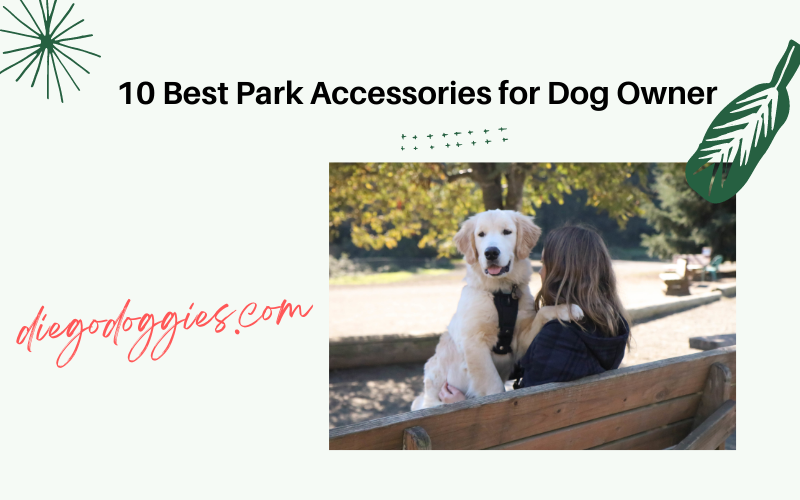
10 Best Park Accessories for Dog Owners

As a dog owner, you initially do not think that you could own a bunch of accessories to make your life easier. This is a harsh truth that many dog owners can relate to. Whether we are talking about smart collars or various kinds of dispensers, there is plenty to choose from.

These accessories make our lovely little furballs happy as well. Dogs bring happiness and joy to our lives. Not only can they help in ridding us of our anxieties and fears, but they also form an important part of our lives.

Accessories and dog products help us not only when we are playing with our furry friends at home. You can even use these accessories and products in various places such as parks, malls while traveling, and while visiting escape rooms at home.

1. A Dog Harness 

Dog harnesses are an important part of the walking and exercising activities of your canine. A lot of people ignore harnesses and go for collars for attaching their leashes.

However, a harness offers significantly better support for your dog. An excellent quality harness is important for providing the necessary padding and strength when pulling on the leash. 

Going to parks for walks with harnesses also helps you in easily attaching and detaching leashes anytime. Also, harnesses give your dogs a much more fashionable look. Dogs, too, deserve to look their best and wear the best. Thus, always try and buy a harness for your dog.

2. Dog Treat Pouch 

A Dog treat pouch is like a belt bag. Except, a dog treat pouch is often a bit bigger and can carry a lot more items. It is a great accessory to have. A lot of pouches out there need to be able to fit our phones, treats, leashes, and much more. Belt pouches are not built for this purpose. 

Furthermore, a dog treat pouch is great for training your new pups. As an adjustable pouch, you can either strap it on your shoulder or use it as a purse as well as a belt pouch. As a bonus, your dogs will love it because treats come out of it easily. 

3. A Dog Backpack 

While most dogs can be walked or even taken in our cars, not everyone is lucky enough to have a car or a park nearby. Sometimes you might have to use public transport. Crowds can be stressful for your dog as well as inconvenient for people.

An effective way to travel in such situations is to own a dog backpack.  A dog backpack is big enough to hold most moderately sized breeds. Some can even hold larger varieties of dogs.

These dog backpacks are handy since most of them come with side pouches to store additional accessories as well. Moreover, your dog might never want to walk again after being carried in it!

4. Poop Bag & Dispenser 

One of the biggest challenges as a dog owner is to train your dogs where and when to relieve themselves. It can take quite a lot of time as well as effort to make sure that your dog is learning the right spots. Nevertheless, a lot of public parks and properties impose a fine on not collecting disposing of dog poop. 

Carrying around a poop bag and a dispenser will help you easily clean u after your dogs. It will be a great necessary part of your walking toolkit. You will never leave without it. 

5. Dog Jackets and Sweater 

Going out with your dog is not an optional activity. Unless and until extreme conditions prevail, your dog needs regular exercise and activity. However, depending on where you live, the weather can often be a big issue. 

For example, in tropical places, constant rain can affect your dogs’ fur. Some dogs do not like their fur wet and might make a fuss over it. Jackets, in such cases, are a handy accessory to have.

In wintry weather, it is good to have a dog sweater to protect your poodle from the cold. Depending on the weather, these accessories can really help your routine walk in the park. 

6. Portable and Collapsible Dog Bowl 

A portable and collapsible dog bowl is what exactly it sounds like. It is great for carrying around your dog’s favorite bowl. Often you will encounter water springs, but it can often be problematic to drink from them. People often carry treats with them as well as water bottles. But feeding your dog can be a challenge. 

However, with a portable and collapsible dog bowl, this problem is easily solved. These silicon bowls can be quite convenient as they can be carried in your treat pouch or dog backpack easily.

7. Durable Rubber Ball 

A durable rubber ball is a great companion to your dog on its daily walk. It is a wonderful way to train and increase the activities they do.

Dogs love to bite a ball and carry them around. Thus, often these balls can get roughed up easily. Having a durable rubber ball ensures you are not going back and forth to buy one.

8. Doggie Water Bottle 

A doggie water bottle is quite like a collapsible dog bowl. The only main difference is that you do not need a water bowl with a doggie water bottle. You just need to squeeze the bottle as the water can easily reach your dogs. It is easy to carry and quite convenient if you do not plan to buy a dog bowl.

9. A Comfortable Collar 

In earlier days, a collar used to be a way to attach a leash. With the introduction of harnesses, collars become redundant. However, collars serve a greater purpose. They can help owners know which is their dog. Collars can also contain the contact information of the owner in case a dog goes missing. 

10. Dog Brush 

Not a lot of people like to brush their dogs at their homes. And it is easy to see why because dogs can shed a lot of fur. This can give them a messy and untidy look as well. So, if you want to save your home from being covered in fur and want to make sure your dog looks good get yourself a dog brush.

Conclusion 

These ten dog accessories are some of the best ones you can have on your daily dog walk in the park. Make sure you try to evaluate each accessory and see which one fits the best to your routine and style. While the above-mentioned ten are some of the best types of accessories to have, only some of these are compulsory. 

Author Bio: Sophia Scott is a content creator at escape rooms.. She’s a passionate young woman, mother to an amazing nine-year-old, and an avid reader. Over the years, writing has helped her explore and understand the world as well as her own self. She loves to travel, meet new people, and spend quality time with her daughter. You can find her on LinkedIn.


Is Your Dog Barking Excessively And Annoying Your Neighbours?

Dog Barking Excessively

Your dog is your responsibility. It is up to you to make sure that he is not causing any annoyance to your neighbors. Even if they are dog lovers themselves and are ready to accommodate a reasonable amount of disturbance from your dog’s barking, it can become really taxing if it continues day in and day out.

You may have come to accept constant barking by your dog as part of the deal and may have become oblivious to the annoyance it is causing others. The best way to find out whether your dog is causing any trouble is to ask your neighbors directly. If anything, it shows that you care about them.

Almost all dogs will bark when they see a strange person or an unusual happening. But if your dog is barking continuously, even when you are at home to check out the matter, it is undesirable behavior. You can reasonably assume that the same behavior continues when you are away from home during the day. This can be troublesome for the neighbors.

You can try to curb excessive barking with patient training. Also, when you go out, you can avoid leaving the dog in the yard because many outside distractions can trigger more barking episodes. The dog barking from inside the house will be muted and less annoying to the neighbors.

Some dogs do not have a problem when the owners are at home, but they may bark incessantly when they are left alone. If your neighbors are complaining about your otherwise angelic dog, you can assume that the dog is barking due to anxiety. Sometimes, extra attention from you and more outings to the park may help normalize the dog.

If the dog continues barking due to the anxiety of being left alone, you can arrange for someone to walk your dog once or twice during your absence. You can consider the option of keeping him in a dog daycare facility as well.

Dog barking excessively

Be attentive to your neighbors’ complaints, and do everything you can to curb excessive barking, but avoid being defensive. As a matter of fact, neighbors of families with troublesome dogs are known to invest in ultrasonic dog control devices more often than dog owners.


As a responsible dog owner and a person with concern for neighbors, you can even seek their suggestions as to how you can make things better for them. Getting your neighbors involved is the key to avoiding misunderstandings with them.

Related Content

How to Help an Overweight Dog

Dog owners often fail to notice when their dogs are becoming overweight because the pounds can be put on them very gradually. Becoming exhausted after a short workout or a brisk walk may be the first signs that alert you to the weight problem of your dog.

You might feel guilty for having neglected this part of dog care responsibilities, but do not fret. There are simple, practical solutions to tackle this problem.

The most important thing is that you love the dog enough to do what it takes to bring the overweight dog back to normal weight. His health depends on it, since dogs can develop the same obesity-related problems that people suffer from.

However, treating a dog as we treat a person is a mistake we tend to commit. We may feel that an older dog should be given plenty of rest and should have a reprieve from exercise routines. In fact, when many older dogs show a reluctance to go for regular walks, their owners should not let them have their way.

Dogs need to remain active to stay healthy. Unless your dog has a specific health condition that makes it dangerous for him to exercise, you should insist on daily walks and exercise. Do not feel bad about it.

Find the Right Food for Your Dog

While every dog requires a nutritious diet, your dog’s diet should be adjusted to his size, age, and activity level. Adult dogs may not need high energy foods that fast-growing puppies require.

A pregnant or lactating dog requires more food than a male dog of the same age. You should discuss the nutritional needs of your dog with your veterinarian and select a dog food that is right for him.

Portion Control

Smaller dogs need only a small quantity of food. Even larger dogs should not be fed too much if they are leading a sedentary life. Some dogs look larger than they really are because of their thick furry coat, but their stomach may be small. When they are fed too much food, the excess gets stored as fat.

Do not go by the suggestions given on the dog food packaging. They only give a general idea and are meant for maintaining weight, not for affecting weight loss.  When you want to help the dog lose weight, you should get the veterinarian to prescribe the number of calories the dog needs and plan the meals accordingly. Exercise strict portion control, counting in the special treats you offer him from time to time. 

Interval Feeding

Interval Feeding

Some dog owners are under the impression that food should always be made available to the dogs so that they can eat at will. A dog in the wild does not have fixed mealtimes, but that does not mean that food is always available. Wild dogs must spend a lot of time hunting to keep themselves reasonably fed and often go hungry for long periods. So, it is not wrong to feed your dog at fixed intervals.

If the food is left out, many dogs eat just to occupy themselves just like people snacking mindlessly when they are bored. This should be avoided when you want to help the dog lose weight. If you are not around to feed the dog fixed portions at fixed times, you can invest in an automatic feeder.

Exercise

Exercise

The importance of exercise cannot be stressed enough. If your dog is leading a sedentary life, introduce exercises and activities gradually, but if he is already active, increase their frequency or duration to help the dog lose weight. Do not be worried that you are being too hard on the dog; it is for his health and wellbeing.

Related Content

Three Important Tips When You Adopt a Dog
What You Should Do To Become a Responsible Dog Owner
How To Avoid Dog Heatstroke
How a Dog Microchip Works
How to Avoid Traumatizing Your Dog When You Move
How to Get Rid of Fleas on Your Dog
San Diego Dog Park Safety Tips, Training, and Dog Accessories

Three Important Tips When You Adopt a Dog

You can always buy a puppy from a pet shop or a breeder, but there is nothing more noble and rewarding than adopting a dog who is in dire need of a loving home.  Animal centers are crowded with such needy dogs, so it may not be too difficult to find a dog right for you.

But there are a few things you should keep in mind to make adoption of an adult dog as great an experience as it should be. Many dog owners forget them and start the relationship on a wrong foot, finally ending up frustrated and regretting their decision to adopt.

Here are three important tips to help you make a success of adopting a dog:

Teach the Dog What He is Expected to Do

Housetraining is not just for puppies. When you bring any new dog into your home, remember that the dog is perplexed by the new surroundings and new people.

No matter how lovingly everyone treats him, he feels like a stranger until you teach him exactly what he should and should not do in your home. That includes showing them where to do his potty and where to sleep, the places he is not allowed to use, how to behave with young children etc.

Do not expect him to know all these things intuitively or to learn them overnight. A confused dog tends to be fearful and destructive, so misbehaviour on the dog’s part should be viewed as a need for more training.

Use Positive Methods to Reinforce Good Behaviour

Punishment should not be your tool to train the adopted dog. Remember that he is ill at ease and confused in the new surroundings. Most destructive actions and refusal to obey stem from this. Do not add to his confusion by handing out punishments.

Be patient as you housetrain him and be generous with praise and rewards when he does get something right. This will tell him what he should do to get the same reaction from you.

On the other hand, when you punish a dog, you are not telling him what to do. Dogs do not understand why you are punishing him unless you do it right when he is engaged in an undesirable act. There is no good and bad behavior in the dog’s book. He just desires to please you by repeating actions that are sure to earn praise and rewards from you.

Be Consistent in Your Responses

If you react differently at different times to the same action, the dog will get confused. Make sure that every member of the family knows the house rules for the dog and strictly maintains it.

If the dog is not allowed on the sofa, but one person cuddles up with him there, it sends mixed signals to the dog. It is ideal if there is an understanding about who handles the dog care chores such as feeding him at regular times, taking him for potty, giving him a bath etc.


Maintaining a regular and consistent routine helps the dog feel at home and behave the way you want him to and pave the way to a rewarding relationship.

Related Content

What You Should Do To Become a Responsible Dog Owner
How To Avoid Dog Heatstroke
How a Dog Microchip Works
How to Avoid Traumatizing Your Dog When You Move
How to Get Rid of Fleas on Your Dog
San Diego Dog Park Safety Tips, Training, and Dog Accessories

What You Should Do To Become a Responsible Dog Owner

When you become a proud owner of a dog, a number of responsibilities come with it. A good dog owner is not a person that pampers the dog all the time, but who discharges the essential dog care duties responsibly. Let us see what you should do to be a responsible dog owner.

Keep His Medical Records Straight and Up to Date

Your dog’s health should be given the importance it deserves. Vaccinations and regular medical check-ups should be done at the right time, and their records should be saved for future reference. Establishing a rapport with a veterinarian is also part of the game.

Dog- Healthy Diet

Provide a Healthy Diet

Do not assume that what is good for you is good for the dog. Many things that we eat may be unhealthy for the dog, especially fast food. Do not feed your dog from the table.

Give him good quality dog food that provides him a balanced diet containing all the necessary nutrients in the right proportion. It is difficult to achieve this balance in home-cooked food, so commercial dog food is your best bet.

Give Your Dog Outdoor Time

Give Your Dog Outdoor Time

Whether your dog seems to be content to stay inside the home or not, you should take him out for regular walks and for a game or two. The natural world is the real home of dogs although many breeds have become acclimatized to indoor life.

The fresh air and the sights and sounds of the great outdoors stimulate and invigorate the dog physically and mentally. High-energy dogs find a good outlet for their pent-up energy when they spend time outside. This helps them to be calmer inside the house.

Socialize The Dog

Socialization from a very early age is important in developing a wholesome personality. Socialize the dog by taking him out to parks, other people’s homes, and on public transport.

It teaches your dog how to behave in different situations and in the presence of strange dogs and people. If the dog is unsocialized, he may behave aggressively when he feels threatened in a new situation. Even small, homebound dogs need to have opportunities to socialize.

Respect Your Dog

Your dog is not a cuddly toy or your child. Dogs are pack animals. The position of the dog in your family is more akin to his place in the pack. You should ensure that every member of the family, including children, is above the dog in the hierarchy, but his position in the hierarchy should be respected as well.


Do not treat him like an evergreen baby; it spoils him and encourages him to misbehave. You do not want your children to misbehave, so how can you promote such behavior in the dog? As you can see very well, all the above things are quite practical, so, being a responsible dog owner is not such a difficult task. 

Related Content

How To Avoid Dog Heatstroke
How a Dog Microchip Works
How to Avoid Traumatizing Your Dog When You Move
How to Get Rid of Fleas on Your Dog
San Diego Dog Park Safety Tips, Training, and Dog Accessories



How To Avoid Dog Heatstroke

Avoiding dog heatstroke is important for every dog owner during hot summer days. Dogs are warm-blooded animals just like us humans, but their heat-regulating mechanism is not as efficient as ours. Conservation of body heat is more important to dogs when they are out in the wild, so they are poor at releasing heat from their body. Consequently, they are more prone to heatstroke in hot weather.  

It is important for a dog owner to know the situations that put the dog at risk of heatstroke to avoid them. Recognizing the symptoms of heatstroke is important as well because it can progress to a life-threatening condition if remedial steps are not taken. 

Check the Atmospheric Conditions

You should keep track of the outdoor temperature. Having a good idea about it will alert you to the possibility of heatstroke and help you decide whether allow your dog out of the house. Sometimes, the sun may he beating down on the yard even if the general temperature is not extremely high. This again can put the dog at risk if ample shade is not available. 

Check the Activity Level of The Dog

When external conditions are likely to put the dog at risk of getting overheated, you should watch him closely for early signs of heatstroke. Level of activity is a good indicator, although not a reliable one.

Your dog may be overactive to begin with, but the heat will zap his energy and he will start to become lethargic. Reporting these changes will help the veterinarian make the correct diagnosis in case of an emergency.

Check the Dog’s Temperature

When it is hot outside or when the dog seems to be exhausted, it is a good idea to check his temperature often. The normal rectal temperature reading for a dog is between 99.50 F to 102.50F. If it is above 1030F, you can take it that the dog is overheated and is at risk of heatstroke.

You should take immediate steps to bring down the temperature and watch out for worsening symptoms. If you find your dog to be running 1050F or more, he is suffering from a life-threatening heatstroke. Rush him to the veterinarian immediately.  

Relieving Heatstroke in Dogs

If you spot the early signs of heatstroke, you should take immediate steps to relieve the condition. Move the dog to a cooler location, preferably to the air-conditioned interiors of your home.

If you are in an outdoor setting, take him to a shaded area or create shade with an umbrella or whatever material is available. Fan him and give him cold water to drink. This will help cool his body.

But allow only small amounts of water at a time because a dehydrated dog may drink greedily, resulting in water intoxication. Restrict the movement of the dog, but do not cover him with anything or crowd around him.


Good airflow is important to help carry the heat away from the dog’s body. Watch out for dangerous symptoms of heatstroke such as breathing difficulty or unresponsiveness in the dog. They necessitate immediate medical intervention.

Related Content

How a Dog Microchip Works
How to Avoid Traumatizing Your Dog When You Move
How to Get Rid of Fleas on Your Dog
San Diego Dog Park Safety Tips, Training, and Dog Accessories

How to Avoid Traumatizing Your Dog When You Move

How avoid traumatizing your dog when moving to a new house is important because moving to a new house is stressful to every member of the family, and that includes your dog.

We assume children are the most affected because they are apprehensive about leaving their friends and worry whether they would be able to make new friends in the new place. Similar feelings of unsettlement and insecurity affect dogs too, but they cannot voice their concerns and we cannot explain things to them.

Dogs Take Time to Settle in a New Environment

We can only imagine how the dog views the world around him. He must be having certain places in the house and the yard he loves more than the others. There may be many people in the neighbourhood that he is friendly with.

He must have established an unspoken hierarchy among the dogs and other animals in the neighbourhood. When he is taken to a new place, an entirely new set of sights and smells greet him. Many familiar faces like that of the mailman and the milkman would be replaced by new ones.

His routines may have become disrupted if you have been lax in dog care responsibilities due to unpacking, and cleaning chores. 

Stress Symptoms in Dogs

It is not rare to find dogs developing physical problems such as loss of appetite, diarrhoea or vomiting when their family is moving. It may not be due to any stomach bug, but just stress symptoms in the dog.

If he makes a mess, it will be extra work for you, but try to understand that the dog cannot help it. Talk kindly to him as you clean up the mess and cuddle him reassuringly. 

Your dog may show his anxiety by behavioural changes too, but you should not be impatient with him. He may start doing potty on the carpet or try to tear apart your furniture.

He is not doing it out of spite. He is simply confused and unsettled because his schedule has gone haywire. You cannot assure him verbally that everything will be fine, but you can try to make his schedule as regular as possible.

Unpack his things and some of his favorite items like the couch or the rug first. Arrange these essentials after removing all clutter from some part of the house.

Take Care When Walking Your Dog

You can give a miss to bathing and grooming rituals for a while but continue with other dog care responsibilities as usual. Get a member of the family to give extra attention to the dog while others are busy unpacking things.

Take the dog out for walks frequently, but always have a tight grip on the leash. If something unfamiliar scares him and causes him to take off, he may not be able to find his way back to your new home.

Your Local Vet Can Help Your Dog Calm Down With Medication

If the stress symptoms in the dog do not get resolved within a few days, you can take him to the vet to rule out any physical problem. He may prescribe some calming tablets that would help your dog feel better.


But, more than anything, what your dog wants is your reassuring presence and show of affection. Your dog will eventually settle down as the household returns to normalcy.

Related Content

How a Dog Microchip Works
How to Get Rid of Fleas on Your Dog
San Diego Dog Park Safety Tips, Training, and Dog Accessories


How a Dog Microchip Works

Pets are precious companions for their owners. The same applies to pet breeders. We all take great care of our beloved pets. Though it’s a dog, cat, or any other animal.

Taking care of them every day, grooming them, washing them, playing with them, and spending money on them is a great refreshment and fun aspect of our lives.

However, after all this care there comes the security concern. How are we going to protect them? What precautionary measures should we take to keep them away from getting harmed or getting lost?

I think that the “Getting Lost” part is scarier. In older times, it was almost impossible to recover a lost dog. The owners were worried sick about the thoughts of their dear pet getting lost. Worst case scenario is they might be injured somewhere or may have died.

Due to the boost in technology, the modern era has made it extremely easy for dog owners like you and I to track our dogs. Because pet breeders and researchers have built pet or dog microchips to track your dog’s ownership details.

And in today’s pet session, we are going to discuss “how does a dog microchip work?”

Dog Microchip Work: –

The Interesting Truth

The amazing truth is that these chips are grain-sized and directly injected into the dog’s body. Now, this tiny chip can identify your dog’s whether it is in your local community or in some other city.

Before we proceed, let me tell you that overall, the chip installation and scanning procedure is quite simple and efficient for tracing your lost friend. So, let’s begin…

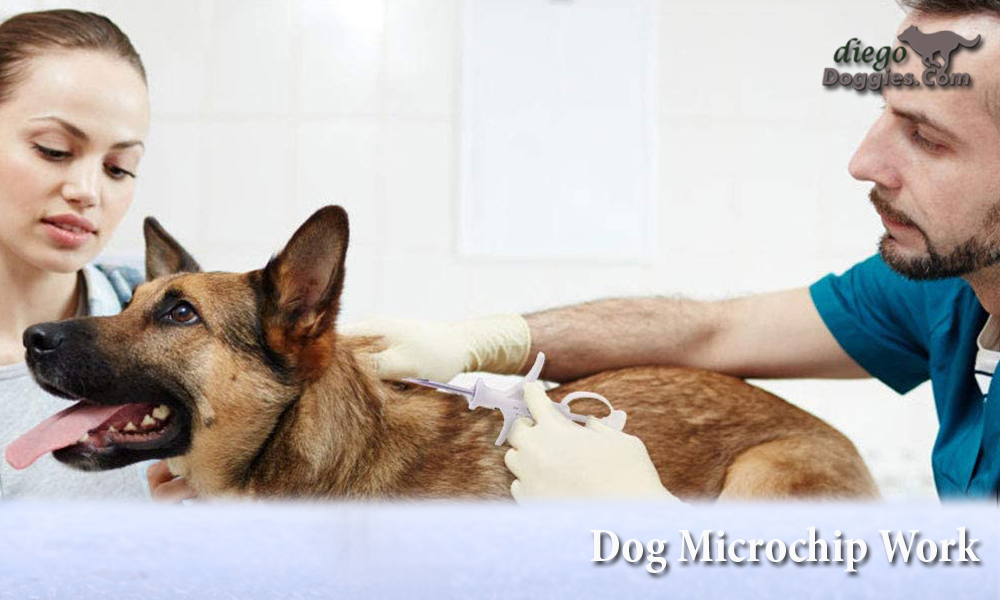
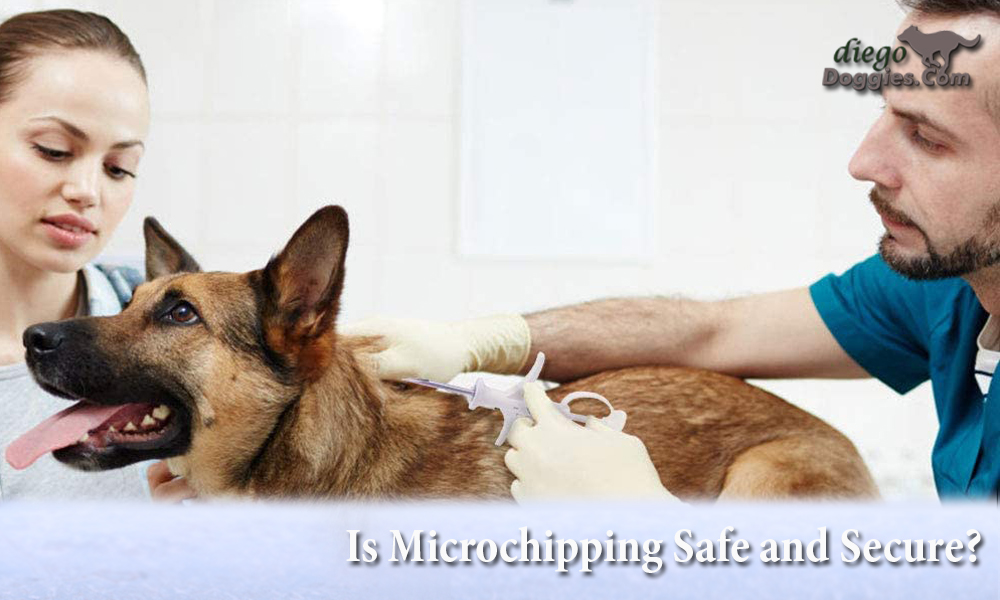
Pet microchipping is an anesthetic-free procedure that takes only a few seconds to complete. A microchip contains a few electronics components that are integrated within a tiny capsule of bio-glass. They are injected beneath your animal’s skin between the shoulder blades.

When the microchip scanner is passed by the pet’s shoulder blades, it emits a radio frequency signal that activates the chip. In return, the chip sends back a unique identification number or pet identification code to the scanner. That code or number is compared against the pet recovery database to retrieve the animal’s owner information.

Microchip, scanner, and database, all these elements make up a triangle for the effective microchip system. Each element has its own job to do to make the system work.

The chip should be inserted in the right place for proper detection and scanning. While the database that is associated with the chip code needs to be accurate and up-to-date as well.

Chips can be undetected because of improper scanning, matted hairs, excessive fat in the body, or due to the metallic collar closer to the microchip. One should be careful of these minor level precautions to avoid any malfunction of the chip.

Types of Microchips

Yes, different types mean the microchip companies use a wide range of frequencies to communicate with the scanner. Recently, there has been developed a universal scanner to read a range of frequencies.

You might face the situation when your pet had a microchip, but a scanner may malfunction and not detect the microchip. The universal scanner sorts out such issues and helps you to locate your pet’s microchip easily.

The microchip manufacturers usually provide universal scanners to the animal shelters and animal control agencies to track the lost pets.

Different Communication Frequencies

The pet microchips come up with a variety of frequencies. In general, the frequencies of 125 kHz, 128 kHz, and 134.2 kHz are used.

125 kHz chip was the most operational frequency in the U.S. A huge number of scanners in the U.S can read this frequency used by the microchips. However, from 2004 onwards, it is replaced by the 134 kHz chip that meets global standards developed by the International Standard Organization (ISO).

Initially, this frequency was adopted by Europe but now manufacturers in the U.S also started developing chips of the same frequency complying with the ISO standard.

Lifespan of Microchips

A question might arise in your mind that how long will the chip remain functional after its placement in the pet.

According to Wikipedia, the average aging of different breeds of dogs ranges from 6 to 16 years. Keeping this in mind, the microchips are engineered to work for over 20 years. So, there is nothing to worry about, the duration of expiry of the chip is far more than the life expectancy of most dogs.

Is Microchipping Safe and Secure?

Anyone can access your information if your pet gets lost. In case of a missing pet that is found and taken by someone to the animal shelter or vet clinic, it will be scanned for a unique identification number associated with it.

And you will be contacted at the registered telephone number by the pet recovery service. It is therefore recommended to keep your information up to date.

How to Adopt Pets Who Are Already Microchipped?

If you adopt a pet that has an implanted microchip, you must look for the corresponding registration to update it. A trip to your local vet to have the dog scanned to locate the registration details is required.  You can then arrange for the registration details to be updated.

What If I Move From One Location To Another?

Whenever you want to move from your registered location, you need to consult the chip registration company to update your profile. The microchip registration company will have your wrong contact details otherwise.

And of course, there are normally minor fee charges for processing and updating your contact information.

How Are Microchips Placed? Will It Hurt?

The microchip insertion is a quick and safe process with an intravenous needle at any veterinarian’s office. This will not hurt your pet. The procedure is as simple as administrating a vaccine.

What About Microchip Placement?

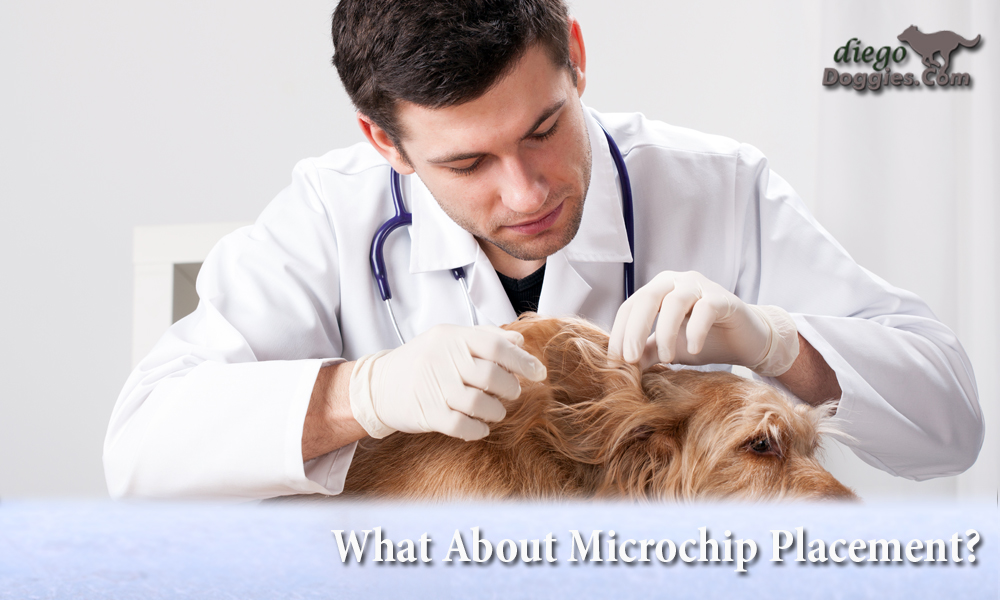
Microchips, as the name micro, depicts that they are tiny electronic devices, not much bigger than a grain of rice. They are implanted beneath the pet’s skin, usually between the shoulder blades.

Is There Any Chance of Misplacing a Chip Inside a Pet?

There is very little chance that a chip could get lost or misplaced. The chip is strongly bonded to the pet’s subcutaneous tissue that heals quickly. This powerful natural adhesion from correct placement normally prevents the chip from migrating to another part of the pet’s body.

Author’s Bio: Hassan Kurd is a cool-headed, optimistic guy and the Founder of Tool Miner

On his online journey for half a decade, he has racked up skills in helping others finding solutions to solve their E-commerce, marketing, blog, and content writing problems.

This is a guest post by Hassan Kurd

How to Get Rid of Fleas on Your Dog

Dogs are adorable creatures that bring a lot of joy to families with small children, and not only them. They are great friends and come in all kinds of sizes, which means they can thrive perfectly in apartments just as much as in houses with gardens.

However, having a furry friend in the house also has many shortcomings, in particular when you go out for a walk and collide with nature.

Especially with smaller breeds, being close to the ground makes them an easy target to all kinds of pests, like fleas and ticks, as well as different weeds that can get caught up in their fur, making it a nightmare to remove.

And even though ticks and grass stuck to the coat are easy to notice, fleas are microscopic and undetectable by the naked eye. This is why you need to pay extra attention to your pet. Here are a few simple steps to follow:

How to Remove Fleas on Your Dog

How to Remove Fleas on Your Dog

If you notice that your pooch scratches way too often than it should, chances are it has fleas building an empire inside the fur. It’s important to proceed with the removal as fast as possible, to avoid dermatitis and all kinds of other nasty diseases the creepy crawlies bring.

Here are the 4 simple steps you need to follow:

What do you need:

  • Flea comb
  • Flea shampoo
  • Vacuum cleaner

And here’s how to proceed to remove the fleas from your dog and surroundings:

  1. Give your pet a bath using lukewarm water and the flea shampoo. First, wash the body and allow the fleas to gather on the head. Then shampoo the head as well, killing the remaining survivors.
  2. Use the flea comb to inspect your dog’s fur and remove any remaining eggs and flea poop (also known as “flea dirt”). Flea combs have very closely located teeth, so they let hair pass through, but everything else will get caught.
  3. Wash all your pet’s beddings and toys. This way you will eliminate any fleas and eggs that your dog left behind.

Clean the entire house thoroughly. Your dog walks all around the house, so there’s a chance of fleas hiding in the couch, bed, carpet, or any other furnished or cluttered area. Vacuum clean everything, mop and wipe all common surfaces and get rid of any unnecessary clutter.

How to Prevent Fleas From Choosing Your Dog

Fleas love dogs just like kids love ice cream. This is why you need to be vigilant at all times when you have dogs at home. By following these simple guidelines, you’ll be able to prevent fleas on your dogs on time and without risking a huge flea infestation in your house:

inspect the dog’s fur daily

1. Inspect the Dog’s Fur Daily

It’s important to check your dog for fleas at least once a day, preferably after a walk. Observe closely for jumping fleas or small black dots, which are flea faeces or eggs. Red itchy spots are also a telltale sign that the little nasties may have settled in. Place the dog on your lap and gently start moving the fur aside, so you can examine the skin underneath it. Focus on the most common places fleas like to attack, like the head, the back and the stomach.

2. Regular Baths Are Also Important

Bathing your dog weekly is a must if you want to prevent a flea infestation. A quick washing of the paws may be enough after a walk, but your pooch also needs to refresh its fur regularly. Give your dog weekly baths using a shampoo formula specialized for killing fleas and ticks.

There are many chemical and organic options out there, ask your veterinarian which is the best one for your furry friend. Some gentle brands of dishwashing detergents can also work, but you need to read the labels carefully.

Saturate the fur with water, then scrub the shampoo in starting from the head, then work your way through the back and legs, and finish at the stomach and tail.

Don’t miss any spots, because flea eggs are extremely resilient and they need to be treated with the product directly. Leave the shampoo to work for the recommended amount of time, then rinse your pooch with water and dry it as usual.

Brush Your Dog Regularly

3. Brush Your Dog Regularly

Regular brushing is mandatory when you have a longhaired pet, and advisably all dogs . Veterinarians recommend using a flea comb on your dog at least three times a week. It will not only help you detect the fleas but also remove them on time if you find any.

Just like with the bathing, start combing at the head and work your way to the back and the legs. Leave the belly for last, as this is the place fleas usually run off to when they feel endangered.

Stroke the fur a few times, then place the comb into a bowl of soapy water and push on the prongs to release any caught fleas. They will quickly drown and won’t cause any more discomfort to your pet.

4. Provide a Clean Surrounding

Except for regular bathing, your dog will also need a clean environment to prevent any future flea infestations. This means the bedding it sleeps in needs to be laundered regularly – a few times a week is more than enough to kill any fleas and eggs that haven’t hatched yet. Regular washing of all the toys and dog clothes is also pivotal to avoid a re-infestation.

Regular vacuuming and keeping the entire house clean also helps prevent any pests from nesting in there, including fleas. Once they arrive on your dog they can also easily hide in carpeted surfaces and upholstered furniture, so you need to take regular care of these too.

After each vacuuming, remember to get rid of the filter bag or disinfect the container with hot soapy water to kill any potential eggs.

Keep Your Dog Healthy

5. Keep Your Dog Healthy

Keep your dog healthy with a proper diet, adequate water intake and plenty of exercises. Most pests like to attack and feed on sickly pets. Active and fit dogs discourage fleas from infesting it. So, by making sure your pooch is healthy and happy, you are providing it with its best chance against the invaders.

6. Invest in a Pest-repellent Collar

Veterinarians sell all kinds of products that repel fleas and ticks and will keep your dog safe during walks. They usually come in two forms – a collar infused with a pest-repellent chemical, or drops that you have to place on the back of your dog. Both products have their pros and cons, and they usually provide between 3-6 months of protection.

Author bio: My name is Alexander Crawley and I’m an entomology consultant for Fantastic Pest Control. As a psychology graduate, I got bored after years of studying humans and found my true fascination – bugs. In my spare time, I like to read and write about insects, help people solve their pest problems.

Affiliate Disclosure: We are a participant in the Amazon Services LLC Associates Program, an affiliate advertising program designed to provide a means for us to earn fees by linking to Amazon.com & other affiliated sites.

Other Affiliates Disclosure: Where an advertisement for a product or service appears on this website as part of an advertising program designed to provide a means for use to earn fees by linking to their website it will not affect the price that you pay.